

Blog
Greasy Roots, Dry Ends: The Curly Hair Problem Nobody Explains Right

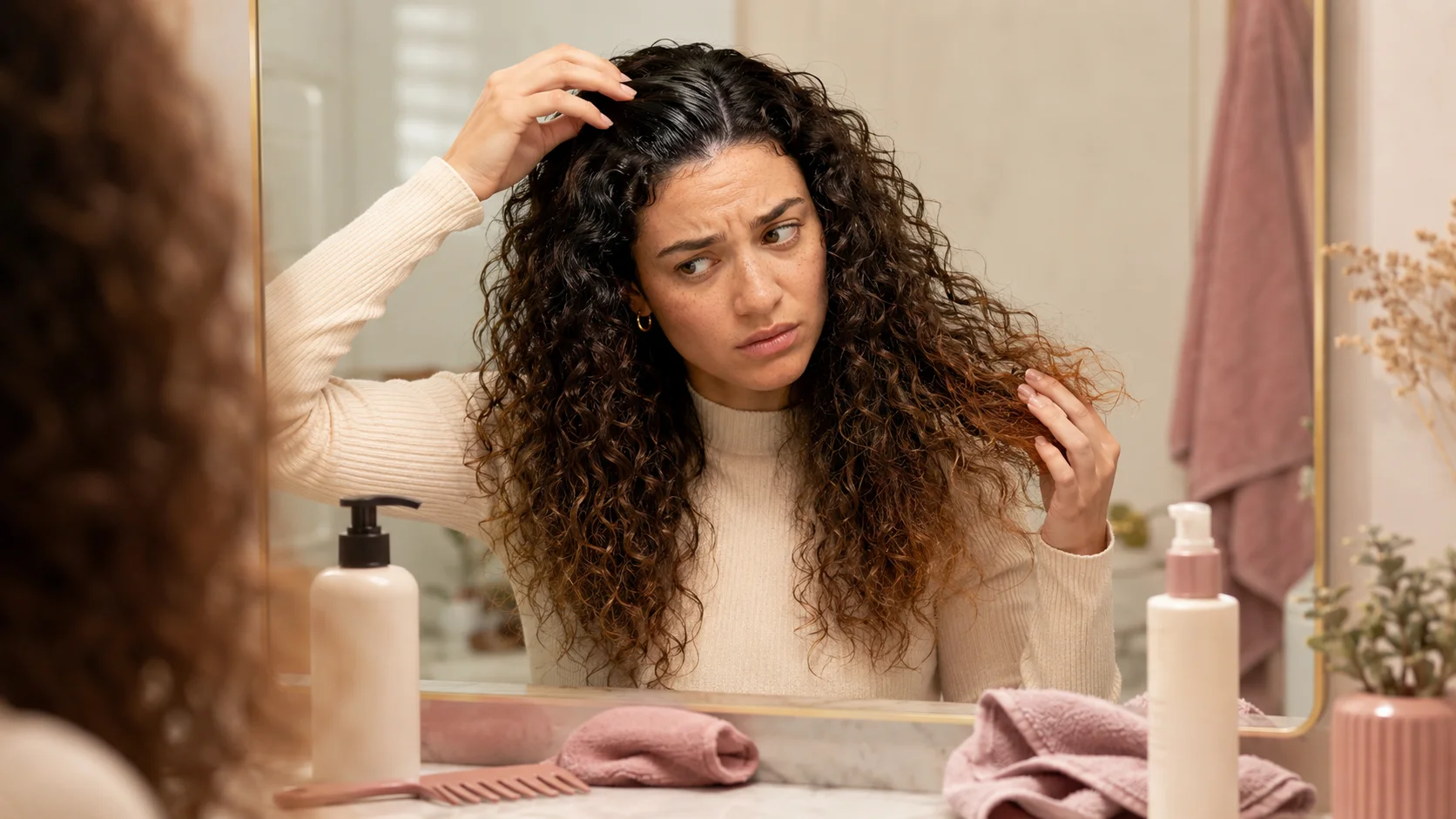
Day two. Roots already slick. Meanwhile your ends still feel like hay.
So you washed more. Reached for dry shampoo. And somehow the dry bits got drier while the grease kept coming back. Sound familiar?
I get this question more than almost any other, and the reason it never gets solved is simple. Nearly all the greasy hair advice floating around was written for straight hair. Your curls play by completely different rules.
If your hair is more wavy than curly, a simple wavy hair routine can help you keep moisture on the lengths without making the roots feel heavy. So when your scalp goes oily fast, you’re dealing with two opposite problems stacked on top of each other. Treat them as one, and you lose every time.
Why Curls Do This When Straight Hair Doesn’t
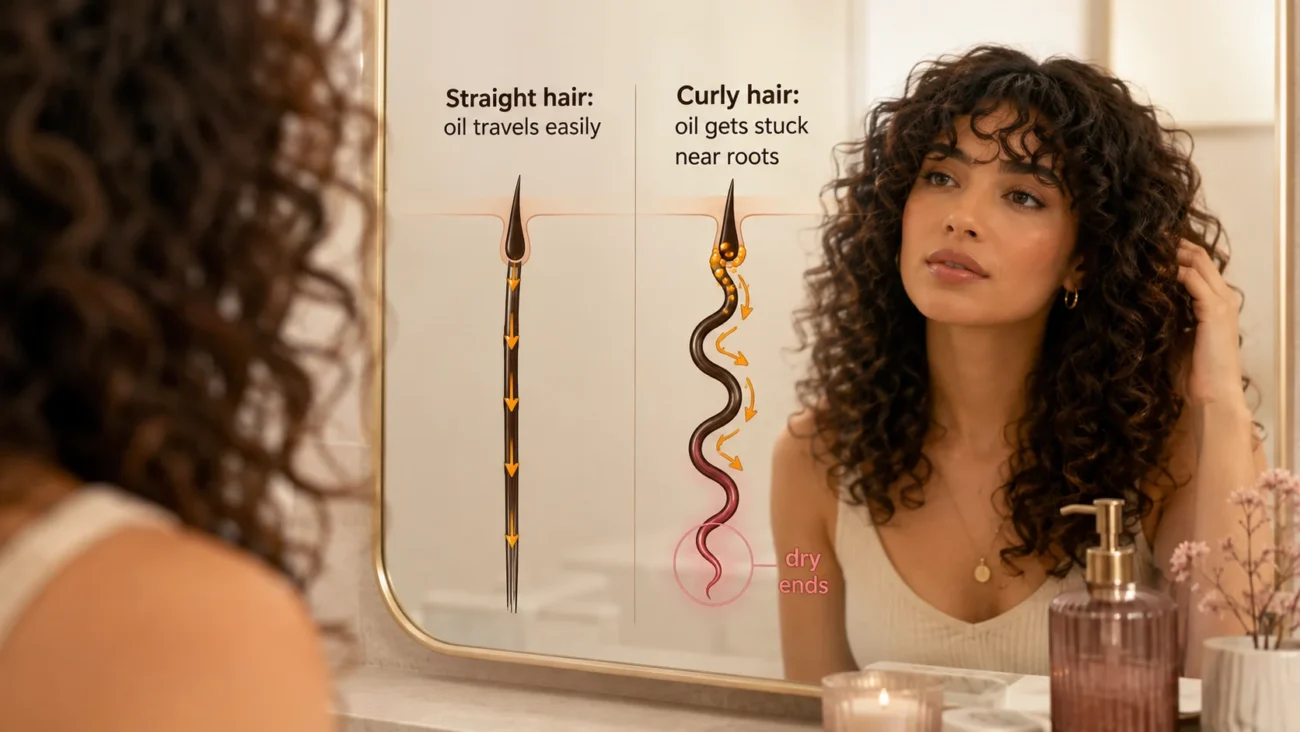
Picture oil on a straight strand. Nothing in its way, so it slides root to tip and the whole length goes oily evenly. That’s the hair every “fix greasy hair” article was built around.
Now add bends. Waves, coils, spirals. Each one is a roadblock. Sebum pools near the scalp because it physically cannot get past the twists fast enough, while your ends sit there getting nothing.
Roots flooded. Ends abandoned. Same head of hair.
I didn’t really understand how much curl pattern drives all of this until I started looking at how different curl types behave with oil, moisture, and product buildup.
You’re Putting Product in the Wrong Spot
Here’s the fix that catches people off guard.

Where does your curl cream actually land? If you’re like most curly girls, you scrunch everything upward, toward the roots, on instinct. Those heavy creams and butters were never meant for your scalp. Up there they just collect, blend with your natural oil, and become the exact grease you keep fighting.
So flip it. Everything from the ears down.
| Zone | What goes here |
| Scalp and roots | Nothing heavy. A light scalp serum at most. |
| Mid-lengths | Leave-in, lightweight cream |
| Ends | The rich stuff. Oils, butters, heaviest cream. |
One client put it perfectly after she switched: “I wasn’t greasy. I was just oiling my own scalp every morning.”
That one change has fixed “greasy” curls that three different shampoos couldn’t touch.
So How Often Should You Actually Wash?
Let me break the rhythm here, because this is where everyone gets contradictory advice.
You’ve heard “wash less” from the curly girl crowd and “wash more” from the greasy hair crowd. Both are right. Both are talking about different people.
If your roots genuinely turn oily within a day or two, stretching to weekly washes is torture and it doesn’t work. Your scalp isn’t going to magically calm down while you walk around with greasy roots for six days. That advice gets passed around like gospel and it leaves a lot of women miserable.
What actually matters is how you wash, not just how often. The trick is treating your scalp and your ends as two separate jobs. As the dermatologists at the American Academy of Dermatology note, cleansing textured hair well is about matching technique to what the hair actually needs, not following one rigid rule.
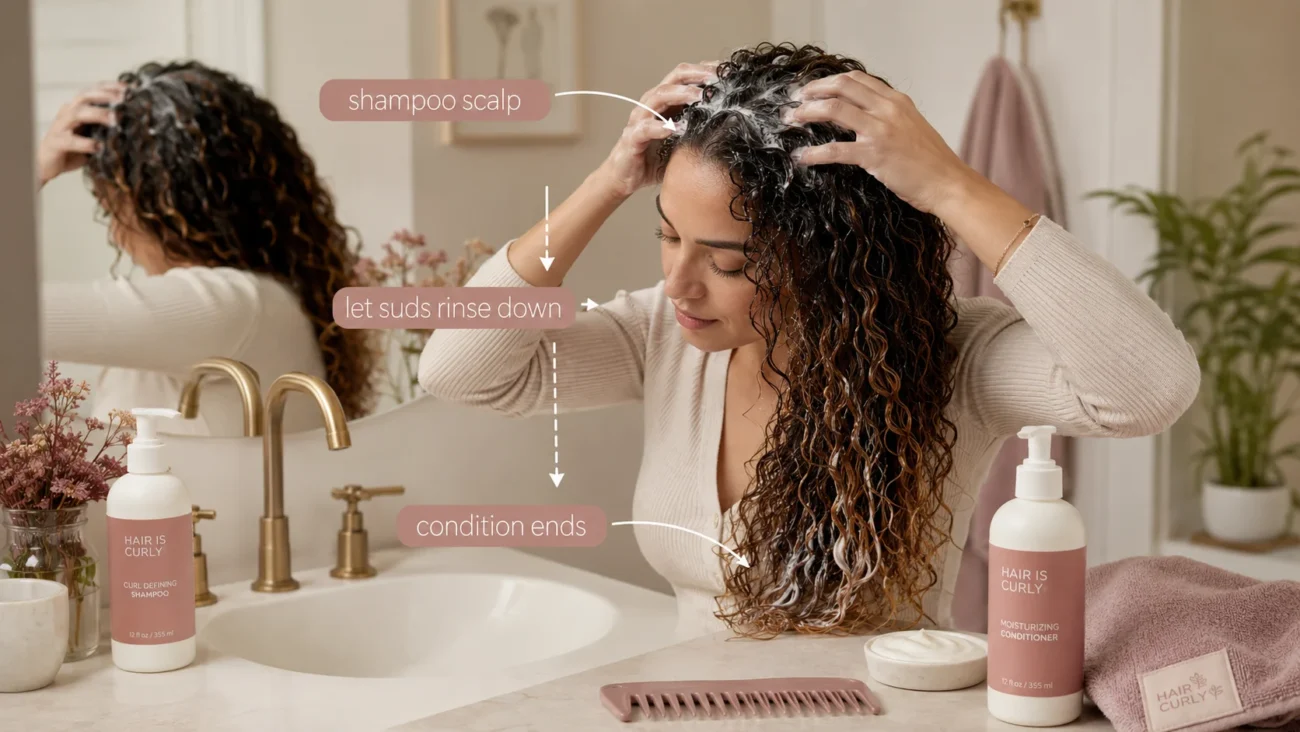
So when you shampoo:
- Focus the lather on your scalp only. Really work it in with your fingertips.
- Let the suds rinse down through your ends on their own. Don’t scrub the lengths.
- Skip shampoo on the ends entirely if they’re dry. The runoff is enough.
Two to three washes a week works for a lot of curly women using this method. But if you need more, wash more. Just keep the shampoo where the oil actually is.
The Porosity Piece Everyone Skips
Here’s what almost no greasy hair article will tell you.
Why your ends stay bone dry while your roots flood has a lot to do with porosity, which is basically how well your hair takes in and holds moisture. It’s the missing variable in this whole conversation.
High porosity hair grabs water fast and loses it just as fast. So your ends drink up product, then dump it within hours, and you’re back to straw by afternoon. Low porosity is the opposite. The cuticle lies flat and tight, so creams and oils sit on the surface instead of sinking in, which can read as greasy buildup even when your scalp behaves.
You can’t fix the root-and-end imbalance until you know which one you’re working with. Figuring out whether your hair is high or low porosity tells you what kind of products will actually absorb instead of just sitting there making things worse.
Quick way to spot yours:
| If your ends… | You’re likely… | What helps |
| Dry out hours after moisturizing | High porosity | Sealing oils, heavier creams on ends |
| Feel coated, product won’t sink in | Low porosity | Lightweight, water-based products |
| Stay balanced most of the day | Medium porosity | You’ve got room to experiment |
The Dry Shampoo Trap
A quick word, because this one keeps people stuck.
Dry shampoo feels like the answer for greasy roots. Spray, wait, done. The problem is it doesn’t remove oil, it just hides it under powder. Use it daily and that powder mixes with sebum and sits on your scalp, which on curly hair can clog things up and make the next wash even harder.
Use it for a genuine emergency. A meeting you forgot about, a morning you slept through your alarm. Not as a daily crutch. Your scalp needs actual cleansing, not a cover-up.
What I’d Try First If This Were You
Enough theory. If you came to me with greasy roots and parched ends, here’s the order I’d actually go in.
Start with the product placement. Honestly, for most women that alone solves half of it within a week. Keep everything off your scalp, push the moisture to your ends, and see what your hair does for seven days before changing anything else.
Still greasy after that? Look at your wash technique next, not your wash frequency. Scalp-focused shampooing, ends left mostly alone.
And if your ends are still drinking up moisture and spitting it back out by lunchtime, that’s your porosity talking, and that’s the rabbit hole worth going down.
One thing I want to be honest about. Sometimes greasy roots that come on suddenly, paired with itching or flaking, point to a scalp issue worth checking with a dermatologist rather than a styling fix. If your scalp feels off and not just oily, trust that instinct.
A Few Things People Always Ask Me
Can I just use a clarifying shampoo to fix the grease?
Once in a while, yes. It strips buildup and resets your scalp. But weekly clarifying on already-dry curly ends will wreck them. Treat it as an occasional reset, not a routine.
Will my roots ever stop getting oily so fast?
Often, yes, once you stop over-washing and over-stripping. The faster you strip your scalp, the harder it works to replace the oil. Easing off usually calms things down over a few weeks. Patience is the annoying part.
Is oil on my roots actually bad for my hair?
Not bad, just inconvenient and a sign things are out of balance. The oil itself isn’t damaging your hair. It’s the over-washing you do to fight it that does the damage.
Your Hair Was Never the Problem
Read that again if you’ve spent years thinking your hair was just difficult.
Greasy roots and dry ends on curly hair isn’t some personal curse. It’s structure, product placement, and porosity, three things you can actually work with once you stop following advice written for hair that behaves nothing like yours.
Move your products down. Wash your scalp, not your length. Learn your porosity. That’s the whole game, and most women see the difference faster than they expect.